Flow & Sign, Symbol, Sound
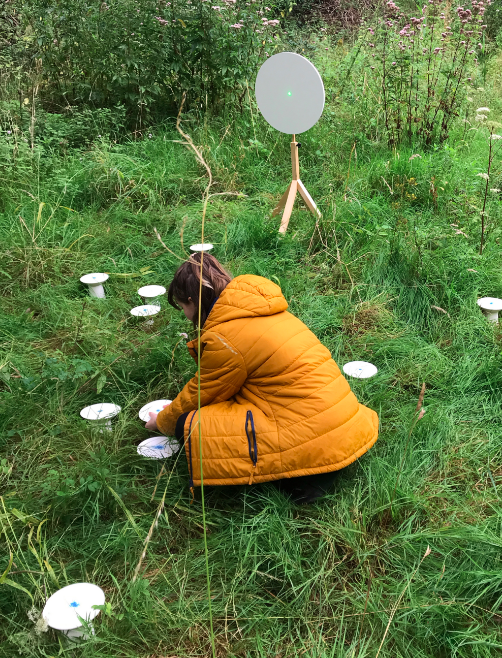
Installing Sign, Symbol, Sound artworks in Oxford
Flow was a creative learning project I led for Modern Art Oxford which supported a group of gallery volunteers in developing curatorial skills. Completed during the pandemic, it resulted in an online exhibition.
Here is a blog post I wrote about the project theme:
Our creative process is unique to us, and we all have our own ways of getting into the creative mindset, from playing a fail-safe album (mine’s Miles Davis’ Kind of Blue) to taking a long walk or simply savouring a morning cup of coffee. Though we all have our idiosyncrasies, perhaps there are some commonalities to the experience of ‘being creative’, or particular conditions which help creativity thrive?
I’m working with members of the volunteer team at Modern Art Oxford to support them in developing a new exhibition for The Glass Tank gallery at Oxford Brookes, which will present work by Oxfordshire-based artists reflecting on the creative process. In particular we are looking at the nature of ideas, the role of our environments in enabling and shaping creative activity, and the concept of Flow state, which was developed by psychologist Mihaly Csikszentmihalyi to anatomise the experience of total immersion in a task: “the state in which people are so involved in an activity that nothing else seems to matter”.
Csikszentmihalyi found that people engaged in creative pursuits often experienced this feeling, though researchers have also applied it to people working in a range of jobs including bank clerks and care workers.
Csikszentmihalyi identified nine conditions or characteristics of Flow state; including working with a clear goal in an activity, a balance between challenges and skills, receiving immediate feedback from the activity, the merging of action and awareness, forgetting one’s self, forgetting time, and an activity that becomes an end in and of itself. Flow, he showed, is a process rather than something we arrive at. As anyone who regularly engages in creative work knows, achieving Flow isn’t always easy or even possible, though it helps if the task in question tests us, and we are working within an environment which supports us.
As a concept for structuring an exhibition, Flow theory poses questions about the relationship between individual experience and the collective, the subjective and the objective, and ways in which artworks might capture or evade fleeting psychological states. As a group, we’re thinking about art both as a reflection of the creativity of the artist, and something which can spark a creative idea in the viewer.
Mainemelis and Dionysiou characterise Flow theory as ‘a view on human flourishing’, emphasising the relationship between creative immersion of any kind and our health and happiness at a level more fundamental and wide reaching than that we might associate with traditional artistic pursuits. Considered that way, it shows creativity to be an end in itself, a process which rewards regardless of the outcome. What better time to immerse yourself?
Sign, Symbol, Sound was a follow-up project with Modern Art Oxford which also sought to equip gallery volunteers with exhibition making skills, as well as explore ideas resonant with the gallery’s wider programme.
Exploring the signs, symbols and sounds that shape our communities and our environment, from experimental poetry and DNA, to nature and ornithology, the project resulted in an interdisciplinary exhibition exploring language and creativity.
This project began with a series of workshops which explored language acquisition and evolution over time, the limits of language, non-human communication and the way art might impact on us extra-textually. We also thought about the role of context in determining linguistic meaning, and how that might transplant that idea into our curatorial work in presenting artworks in an outdoor, natural environment.
Following an open call, the project progressed to bring together the work of fifteen Oxfordshire-based artists who took the theme in all directions, considering the limits of language as well as its capacity to knit together communities. Working in varied media, many of the artists tested the limits of languages written, visual and gestural, at times creating their own languages to enable even greater expression and opening up a space for unbounded interpretation.
“We usually begin exploring any place using a map, but a variety of sources form our true understanding of a place, one that is infinitely richer and more complex than the traditional map would have us believe”. - project participant Sue Chamberlin.