Risk Related was a programme of challenging and playful artistic commissions and events exploring and utilizing risk, as well as the social, cultural, economic, political and ecological relations it draws from and gives rise to. As lead curator, I created and delivered the programme over a two year period, bringing artists and researchers together to model, test and interrogate the many ways risk structures our society; socially, economically, climatically - and in art.
It has been argued that we are living in an ‘age of risk’, where climate change and volatile politics create increasing uncertainty about the future. Closely connected to chance, risk also has a history of informing artistic practice, with chance-led processes having been widely adopted by artists seeking to diminish their own roles in systems of production. Risk is, therefore, associated both with danger and with possibility and potential. Risk-related was a year-long programme of artist commissions, artist residencies and events which embraced both the positive and negative connotations of risk, engaging the subject with the subject in both challenging and playful ways.
Collaborating with academics across Loughborough University, commissioned artists explored how different forms of risk intersect, as well as adopting risky approaches and methodologies in their work.
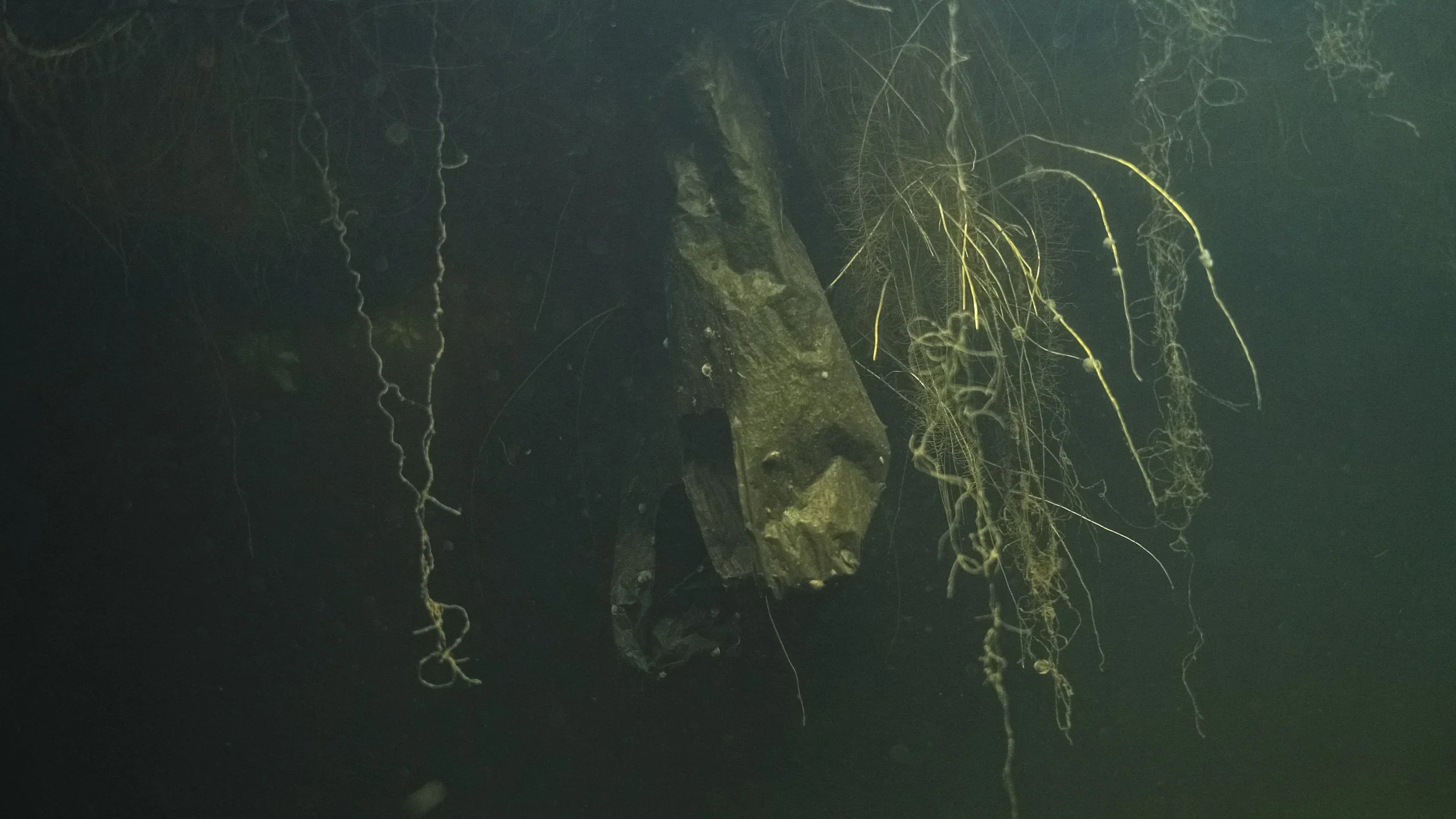
The two lead commissions for the programme were from artists Sonia Levy and Stine Marie-Jacobsen. Levy explored climate risk as it relates to changing ecosystems in lakes and rivers in the East Midlands area. Working with Geographers; Dr Paul Wood, Dr David Ryves and Dr Robert Wilby, Levy’s project focused on the ‘invasive’ or non-native species finding their homes in British waters as temperatures rise. Filming and recording on location around the East Midlands, from urban canals to Peak District rivers, Levy’s project will be realised in the form of a video installation. The commissioned film has gone on to be screened at Tate Modern, and internationally. Stine Marie Jacobsen’s art and healthcare project focused on the development of a somatic ‘element tool kit’ designed to enable children to measure their exposure to pollution in air, water, earth and fire (rising temperatures). The tool kit was developed via a series of workshop sessions with school groups in Loughborough, and the collected data will be brought to life as an interactive, animated film hosted by an open-source online repository. Seeking to re-cast the idea of ‘risk assessment’ in a way which privileges situated, embodied understanding, the project also reflected on the fallacy of objectivity and the process of data translation inherent to many research exercises. The title Body Weather is inspired by the Japanese performance practices Butoh and Body Weather which investigate the intersections of bodies and their environments.
In addition to the two lead commissions, three artists in residence worked with researchers to explore risk from a range of perspectives. Artist duo FRAUD (Audrey Samson & Francisco Gallardo) explored the methods of risk analysis deployed by the European border control agency (FRONTEX). Their research informed an installation and publication. Working alongside researchers specialising in AI, Libby Heaney developed a new performance piece which puts singer Nabihah Iqbal into dialogue with an AI bot, exploring relationships between risk and prediction, as well as embracing ideas of artistic failure.
Curated with support from David Bell for Radar, University of Loughborough. The academic lead for this programme was Ksenia Chmutina, Senior Lecturer in Sustainable and Resilient Urbanism.